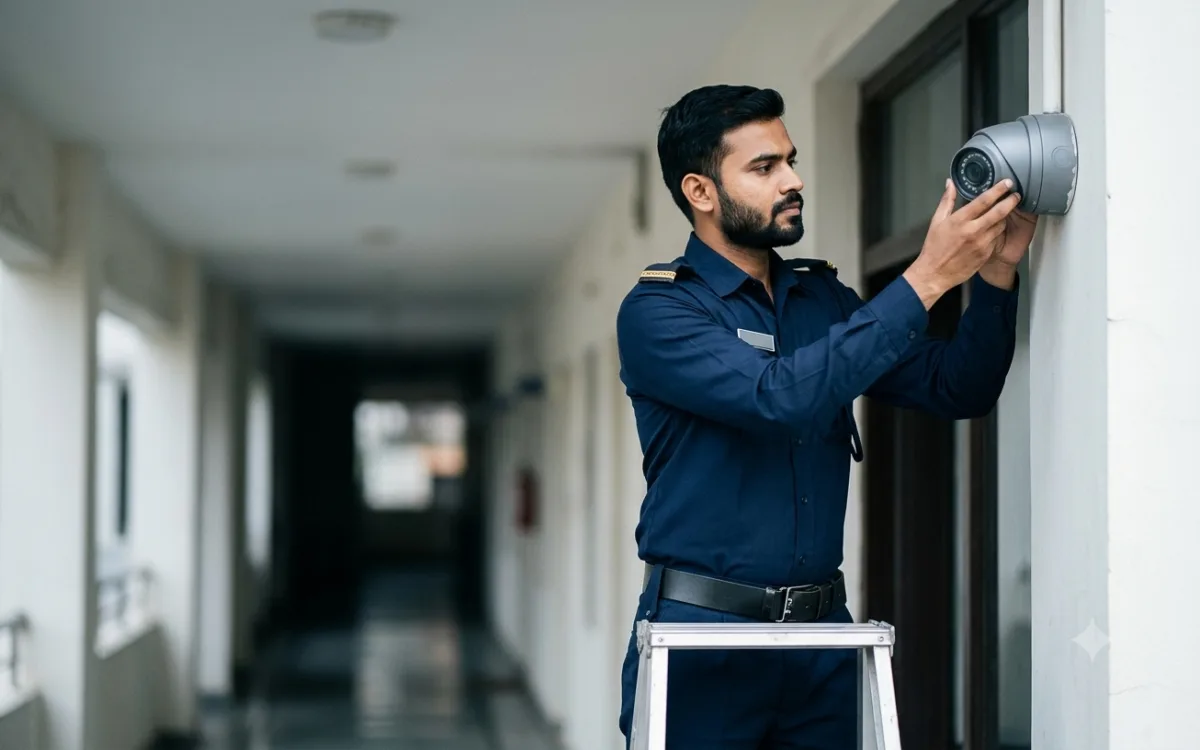
After an incident, footage gets pulled and the same discovery repeats: the camera saw it, but the footage proves nothing. Almost always it traces to one of these seven placement errors.
1. Mounting too high
A camera at four metres records the tops of heads. For identification, mount at 2.5 metres facing approach paths - high enough to avoid tampering, low enough to capture faces.
2. Shooting into the light
A camera pointed at a glass entrance during daylight backlights every visitor into a silhouette. Use WDR-capable cameras or reposition off-axis.
3. Covering area instead of choke points
Wide-angle coverage of a car park identifies nobody. Cameras earn their keep at choke points: doorways, stair landings, till counters, gates.
4. Ignoring retention requirements
Many incidents surface weeks later. Thirty-day retention is the practical minimum; size storage before buying cameras, not after.
5. Leaving the NVR in the open
An intruder who takes the recorder takes the evidence. The NVR belongs in a locked cabinet in a separate room, ideally with cloud backup.
6. Never verifying time sync
Footage with a clock drifted by two hours invites challenge. Sync to NTP and audit quarterly.
7. No maintenance schedule
Spider webs, dust, condensation and slow focus drift silently degrade every installation. Quarterly cleaning and a monthly playback spot-check keep the system honest.
Test it properly
Have someone walk the intruder's likely path, then review that footage on the actual monitor your team will use. If you cannot identify a colleague you already know, you will not identify a stranger.